Aug 24, 2026
Why Is the Wire Feeding Unstable in Handheld Laser Welding?
Learn the common causes of unstable wire feeding and how to achieve smoother, more consistent handheld laser welding.
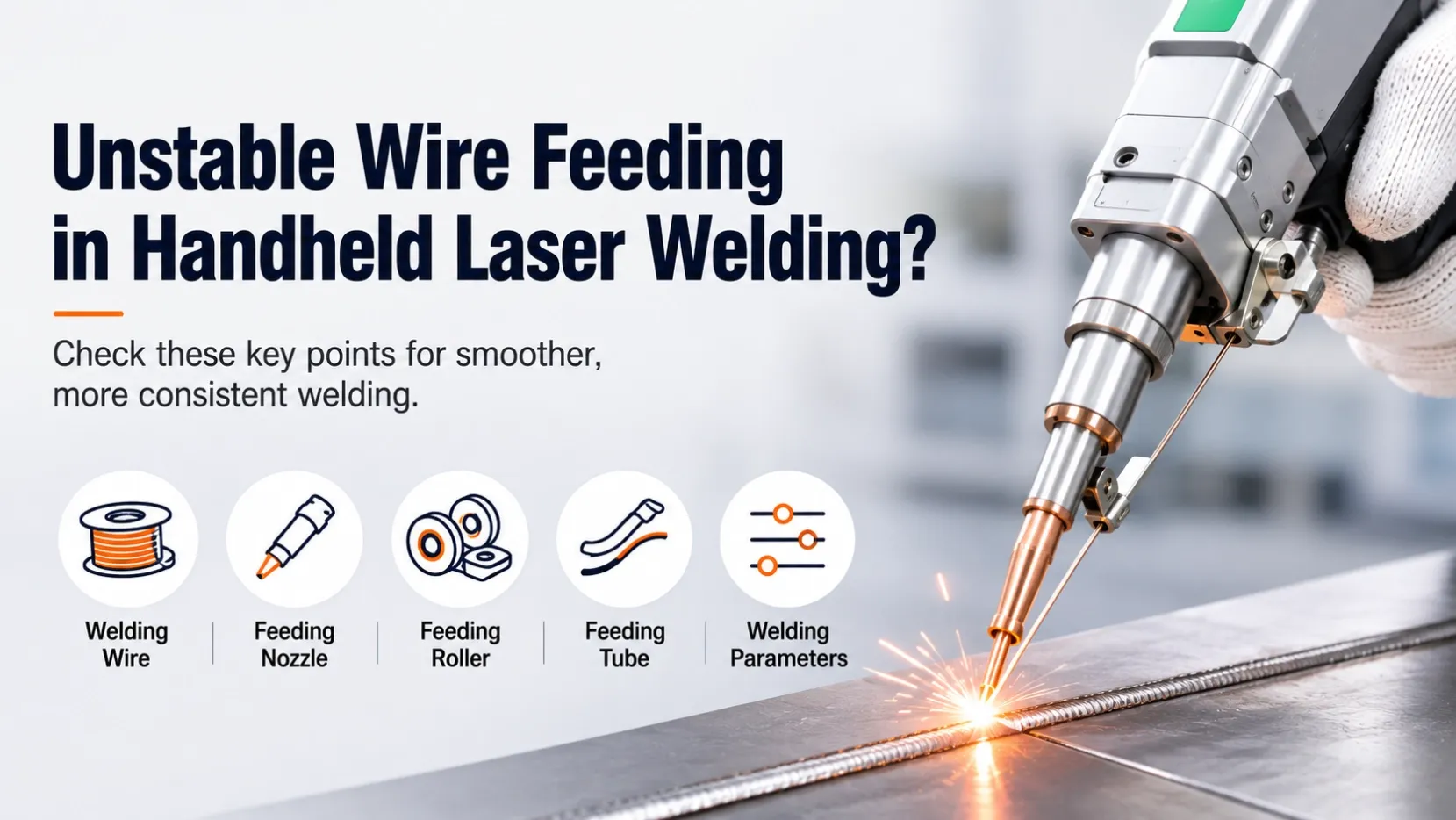
In Handheld Laser Welding, wire feeding is important when filler wire is required. An unstable wire feeding system can cause inconsistent weld formation, wire jams, uneven wire output, and even welding defects.
If the welding wire does not feed smoothly, the problem is not necessarily caused by the wire feeder itself. The welding wire, feeding nozzle, feeding roller, feeding tube, tension, welding angle, and welding parameters should all be checked.
This guide explains the most common causes of unstable wire feeding and how to troubleshoot them.
1. The Welding Wire Is Bent or Damaged
The condition of the welding wire has a direct effect on feeding stability.
Wire that is bent, tangled, rusty, contaminated, or inconsistent in diameter can increase friction inside the feeding system and cause intermittent feeding or wire jams. Current troubleshooting guidance also recommends checking the spool for knots, bends, damage, grease, and rust.
Before welding, check that:
- The wire is straight
- The spool is properly installed
- There are no tangled sections
- The wire surface is clean
- The wire diameter is consistent
Poor-quality or damaged wire should be replaced rather than forced through the feeder.
2. The Wire Feeding Nozzle Does Not Match the Wire
The Wire Feeding Nozzle must be compatible with the diameter of the welding wire.
For example, using a nozzle designed for a different wire diameter can increase friction or allow excessive movement of the wire.
This may result in:
- Unstable wire feeding
- Wire jamming
- Uneven wire output
- Inaccurate filler wire positioning
Always select the feeding nozzle according to the welding wire diameter and the welding machine manufacturer's specifications.
3. The Feeding Roller Is Incorrect or Worn
The feeding roller transfers the driving force to the welding wire.
If the roller groove does not match the wire diameter, the wire may slip or become deformed.
A worn or contaminated roller can also reduce feeding stability. Manufacturer manuals recommend regularly checking the roller groove and replacing components when wear becomes significant.
Check:
Wire diameter → Feeding roller size → Roller condition → Roller pressure
The pressure should be sufficient to drive the wire without excessively deforming it.
4. The Wire Feeding Tube Is Bent
The feeding tube guides the welding wire from the feeder to the welding head.
A sharp bend or twisted tube increases friction and makes it harder for the wire to move smoothly.
This is particularly noticeable when:
- The welding torch is moved frequently
- The cable is sharply bent
- The feeding tube is damaged
- Metal dust accumulates inside the tube
Keep the feeding tube as straight as practical during operation. If the tube is damaged or the wire cannot pass through it smoothly, cleaning or replacement may be necessary.
5. The Wire Feeding Tension Is Too High or Too Low
Incorrect feeding tension can also cause unstable wire movement.
If the tension is too low, the wire may slip on the feeding roller.
If the tension is too high, the wire can become deformed, increasing friction and potentially causing jams.
The correct setting should allow the roller to feed the wire consistently without crushing or damaging it.
Avoid solving every feeding problem simply by increasing roller pressure.
6. The Welding Wire Is Not Properly Aligned
The welding wire should enter the feeding path smoothly and remain properly aligned with the welding head.
If the wire is offset or the feeding components are not correctly installed, the wire may rub against the inside of the guide or exit from the nozzle at an inconsistent angle.
During setup, check:
- Wire spool alignment
- Feeding roller alignment
- Feeding tube connection
- Wire feeding nozzle position
- Wire exit position
Proper alignment helps reduce unnecessary friction and improves feeding consistency.
7. Welding Technique Can Affect Wire Feeding
Sometimes the wire feeder works normally during manual feeding but becomes unstable during actual welding.
In this situation, the problem may be related to welding technique rather than the feeder.
For example, pressing the welding head downward or using an unsuitable angle can increase resistance to wire movement. Current manufacturer guidance specifically identifies welding angle and excessive pressure on the welding head as possible causes of unstable wire feeding.
During welding, try to maintain a stable:
- Welding angle
- Working distance
- Wire extension
- Welding direction
8. Wire Feeding Speed Does Not Match the Welding Parameters
Wire feeding speed should be matched with the overall welding process.
If the wire feeding speed is too high, excessive filler material may enter the molten pool.
If the speed is too low, insufficient filler material may result in an uneven weld.
The relationship between laser power, welding speed, wobble parameters, and wire feeding speed should be considered as a complete system rather than adjusted independently.
If the wire feeds smoothly but the weld still looks uneven, check the welding parameters as well. Manufacturer troubleshooting documentation also identifies a mismatch between welding parameters and wire feeding speed as a potential cause of unstable feeding.
How to Troubleshoot Unstable Wire Feeding
When wire feeding becomes unstable, check the system step by step:
Step 1: Check the Welding Wire
Look for bends, tangles, rust, contamination, or inconsistent diameter.
Step 2: Check the Feeding Nozzle
Make sure the nozzle matches the welding wire diameter.
Step 3: Check the Feeding Roller
Inspect the groove for contamination, wear, or incorrect sizing.
Step 4: Check the Feeding Tube
Make sure it is not sharply bent, blocked, or damaged.
Step 5: Check Feeding Tension
Make sure the wire is driven smoothly without excessive deformation.
Step 6: Check the Welding Technique
Maintain a suitable welding angle and avoid pressing the welding head downward.
Step 7: Check the Welding Parameters
Make sure the wire feeding speed is compatible with laser power and welding speed.
How to Prevent Wire Feeding Problems?
Regular maintenance can significantly reduce unexpected wire feeding problems.
- Use high-quality welding wire
- Select the correct Wire Feeding Nozzle
- Match the feeding roller to the wire diameter
- Keep the feeding tube clean and properly positioned
- Check roller wear regularly
- Avoid sharp bends in the feeding tube
- Keep the welding wire dry and clean
- Match wire feeding speed with welding parameters
For high-frequency welding operations, routine inspection of the feeding roller, feeding tube, connectors, and other components is recommended.
Unstable wire feeding is a common issue that can affect the performance of Handheld Laser Welding Machine.
The cause may come from the welding wire itself, an incorrect Wire Feeding Nozzle, worn feeding rollers, excessive tube bending, incorrect tension, improper welding technique, or mismatched welding parameters.
Instead of immediately replacing the wire feeder, check the entire feeding system step by step.
With the correct welding wire, feeding nozzle, feeding roller, feeding tube, and welding parameters, manufacturers can achieve smoother wire delivery, more consistent weld formation, and more reliable Handheld Laser Welding performance.