Oct 20, 2026
How to Reduce the Heat-Affected Zone in Handheld Laser Welding?
A smaller heat-affected zone helps preserve material properties and improve weld quality. Discover practical ways to control heat input and reduce unnecessary heating during handheld laser welding.
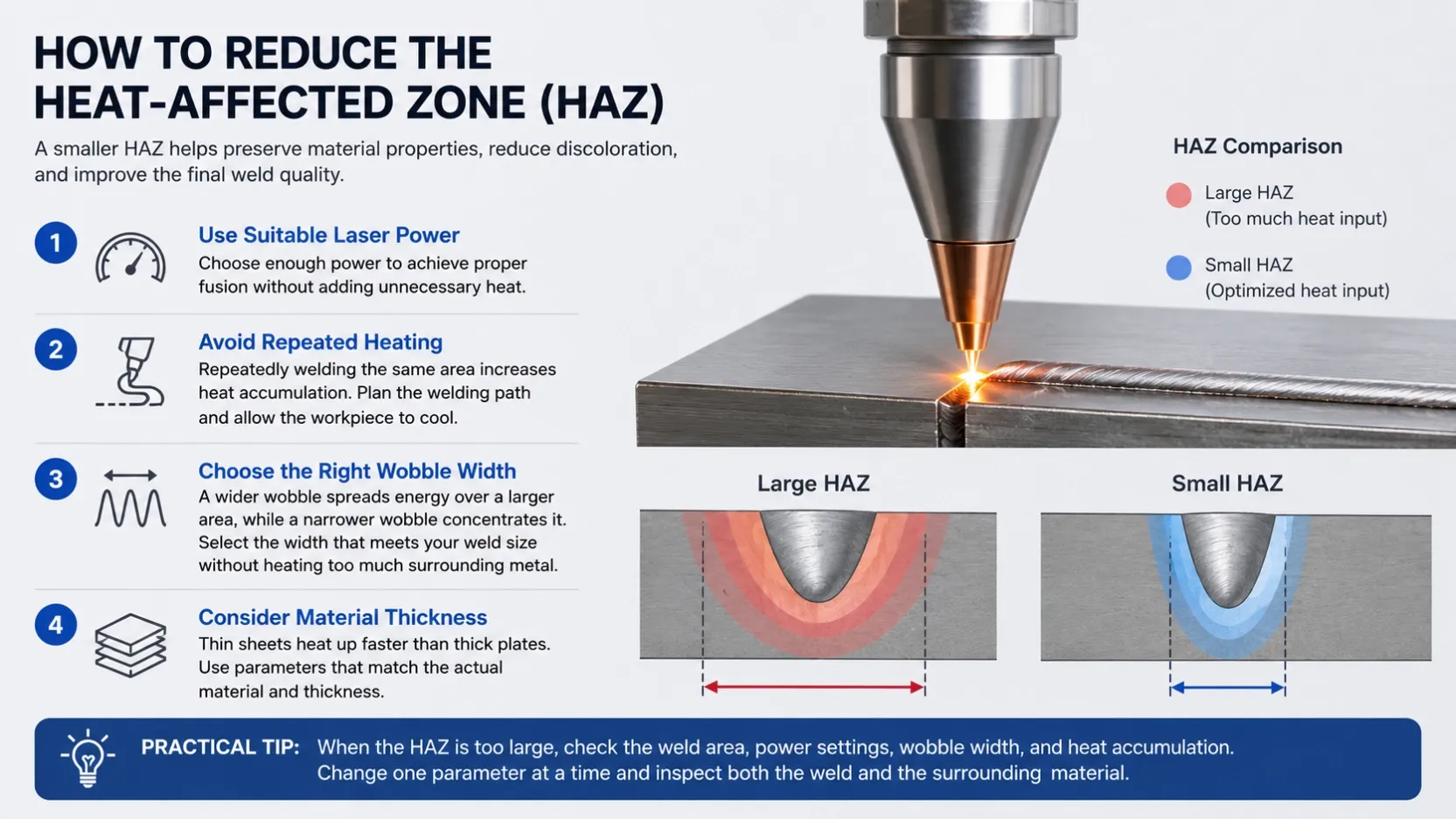
The heat-affected zone (HAZ) is the area around a weld where the base metal changes due to heat, even though it does not melt. A smaller HAZ can help preserve the material's properties, reduce discoloration, and improve the final appearance.
1. Use Suitable Laser Power
Excessive power can heat a larger area than necessary. Choose enough power to achieve proper fusion without adding unnecessary heat.
2. Avoid Repeated Heating
Repeatedly welding the same area increases heat accumulation. Plan the welding path carefully and allow the workpiece to cool when necessary.
3. Choose the Right Wobble Width
A wider wobble spreads energy across a larger area, while a narrower wobble concentrates it. Select a width that meets the required weld size without heating too much surrounding material.
4. Consider Material Thickness
Thin sheets heat up more quickly than thick plates. Start with suitable parameters for the actual material and thickness rather than copying settings from another job.
When the heat-affected zone is too large, check the weld area, power settings, wobble width, and heat accumulation. Change one parameter at a time and inspect both the weld and the surrounding material.