Aug 19, 2026
Why Does Laser Welding Produce Excessive Spatter? Causes and Solutions
Excessive spatter can affect weld quality and damage key consumables. Learn the common causes and practical solutions for more stable Handheld Laser Welding.
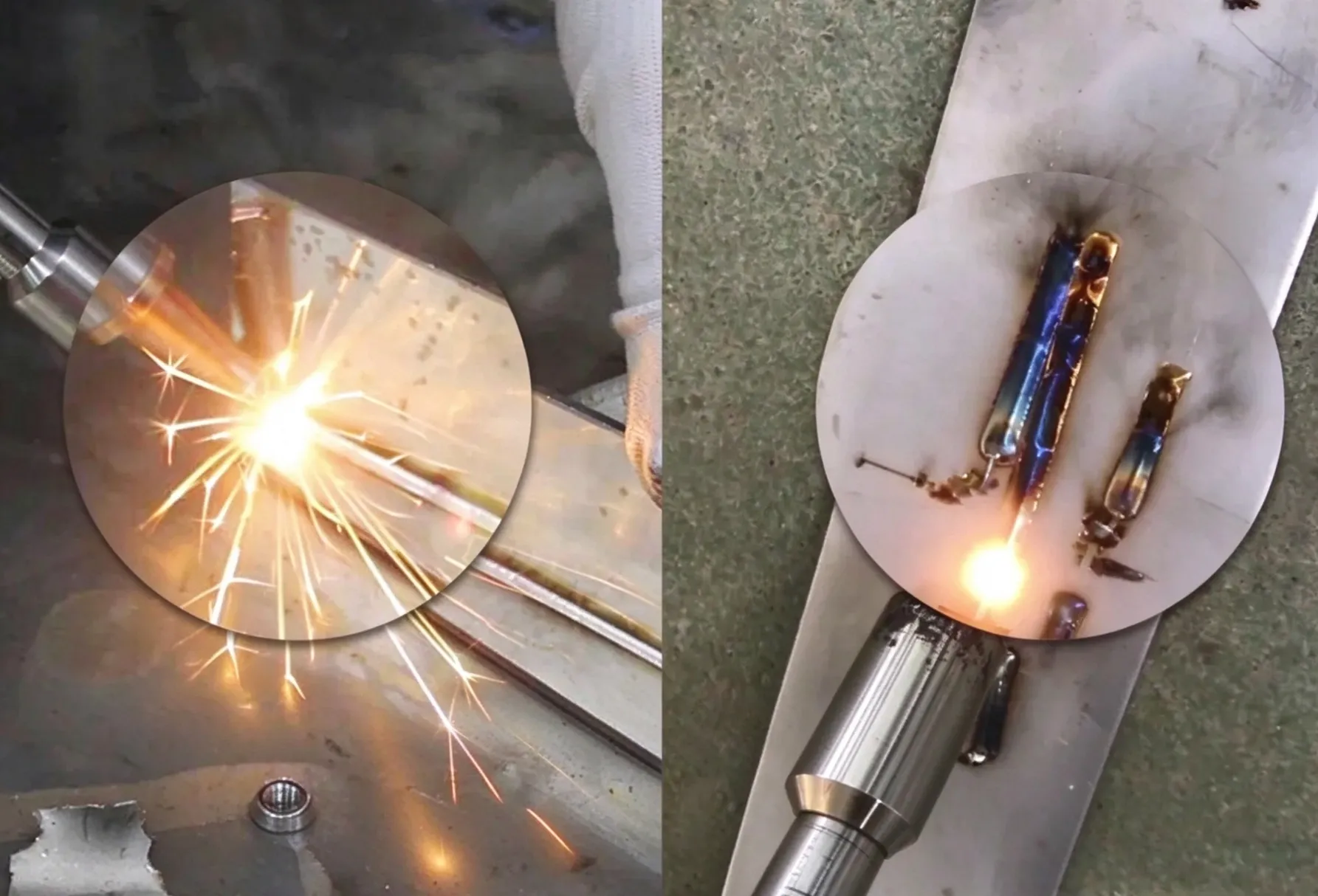
Excessive spatter is a common problem in Handheld Laser Welding. A small amount of spatter can be normal, but excessive spatter can affect weld appearance, contaminate the Protective Lens, reduce welding stability, and increase consumable replacement costs.
So, why does a Handheld Welding Machine produce excessive spatter, and how can the problem be solved?
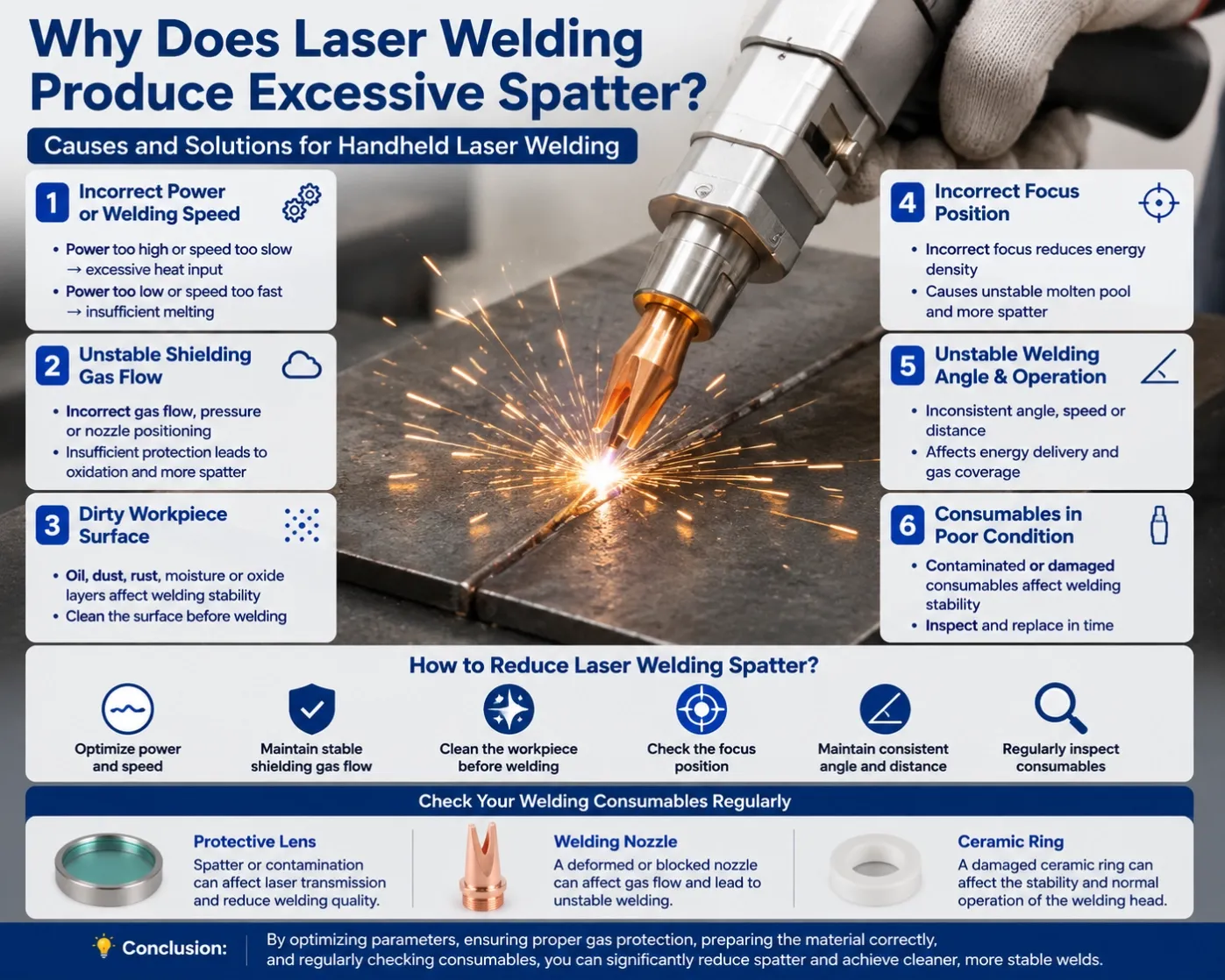
1. Incorrect Laser Power and Welding Speed
Laser power and welding speed directly affect the stability of the molten pool.
When the laser power is too high or the welding speed is too slow, excessive heat input can make the molten pool unstable and increase spatter.
On the other hand, if the laser power is too low or the welding speed is too fast, the material may not melt sufficiently, which can also result in unstable welding.
Therefore, laser power and welding speed should be properly matched according to the material type, thickness, and welding requirements
2. Unstable Shielding Gas Flow
Shielding gas plays an important role in laser welding. It protects the molten pool and reduces the effect of oxygen and other gases in the surrounding environment.
Incorrect gas flow, pressure, or nozzle positioning may result in insufficient protection and cause:
- Increased spatter
- Weld oxidation
- Uneven weld formation
Check the gas supply system and make sure the Welding Nozzle is clean, undamaged, and correctly installed.
3. The Workpiece Surface Is Not Clean
Oil, dust, rust, moisture, and oxide layers on the material surface can affect laser energy transfer and molten pool stability.
These contaminants may generate additional gas or cause an unstable molten pool during welding, resulting in more spatter.
Before welding:
- Remove oil and dust
- Clean rust and obvious oxide layers
- Make sure the workpiece is dry
Proper surface preparation is especially important when welding stainless steel, aluminum, and other materials that are sensitive to surface contamination.
4. Incorrect Focus Position
The focus position determines how the laser energy is concentrated on the workpiece.
If the focus position is incorrect, the energy density may not be suitable for the application, resulting in an unstable molten pool, excessive spatter, or uneven weld formation.
If spatter suddenly increases, check:
- Focus position
- Distance between the welding head and workpiece
- Welding parameters for the material
Correct focus positioning helps improve laser energy utilization and welding stability.
5. Unstable Welding Angle and Operation
The operator's technique can also affect spatter during handheld laser welding.
Problems may occur when:
- The welding angle changes significantly
- Welding speed is inconsistent
- The distance between the nozzle and workpiece changes frequently
These factors can affect laser energy delivery and shielding gas coverage.
During operation, try to maintain a consistent welding angle, movement speed, and working distance.
6. Check Your Welding Consumables
If the welding parameters and operation appear normal, inspect the consumables.
Protective Lens
Dust, smoke, or spatter on the Protective Lens can affect laser transmission and may further reduce welding quality.
Welding Nozzle
A deformed, blocked, or heavily contaminated Welding Nozzle can affect shielding gas flow and lead to unstable welding.
Ceramic Ring
A damaged Ceramic Ring may affect the normal working condition and stability of the welding head.
Regular inspection and timely replacement of these consumables are important for maintaining the performance of a Handheld Welding Machine.
How to Reduce Laser Welding Spatter?
To reduce excessive spatter, check the following:
- Optimize laser power and welding speed
- Maintain stable shielding gas flow
- Clean the workpiece before welding
- Check the focus position
- Maintain a consistent welding angle and distance
- Regularly inspect the Protective Lens, Welding Nozzle, and Ceramic Ring
Do not simply increase or decrease laser power when dealing with excessive spatter. Check the parameters, gas protection, material condition, operation, and consumables step by step.
Excessive spatter is one of the common problems in Handheld Laser Welding. It can be caused by incorrect welding parameters, unstable shielding gas, contaminated materials, improper operation, or damaged consumables.
By optimizing welding parameters, maintaining proper gas protection, preparing the material correctly, and regularly checking welding consumables, manufacturers can improve welding stability and reduce unnecessary maintenance costs.
A properly maintained Handheld Welding Machine, combined with suitable Laser Welding Consumables, can provide cleaner welds, better consistency, and more reliable performance.