Oct 21, 2026
How to Weld Thin Metal Sheets with a Handheld Laser Welding Machine?
Welding thin metal sheets requires careful power control and consistent movement. Discover practical tips for achieving cleaner welds, reducing deformation, and improving welding quality.
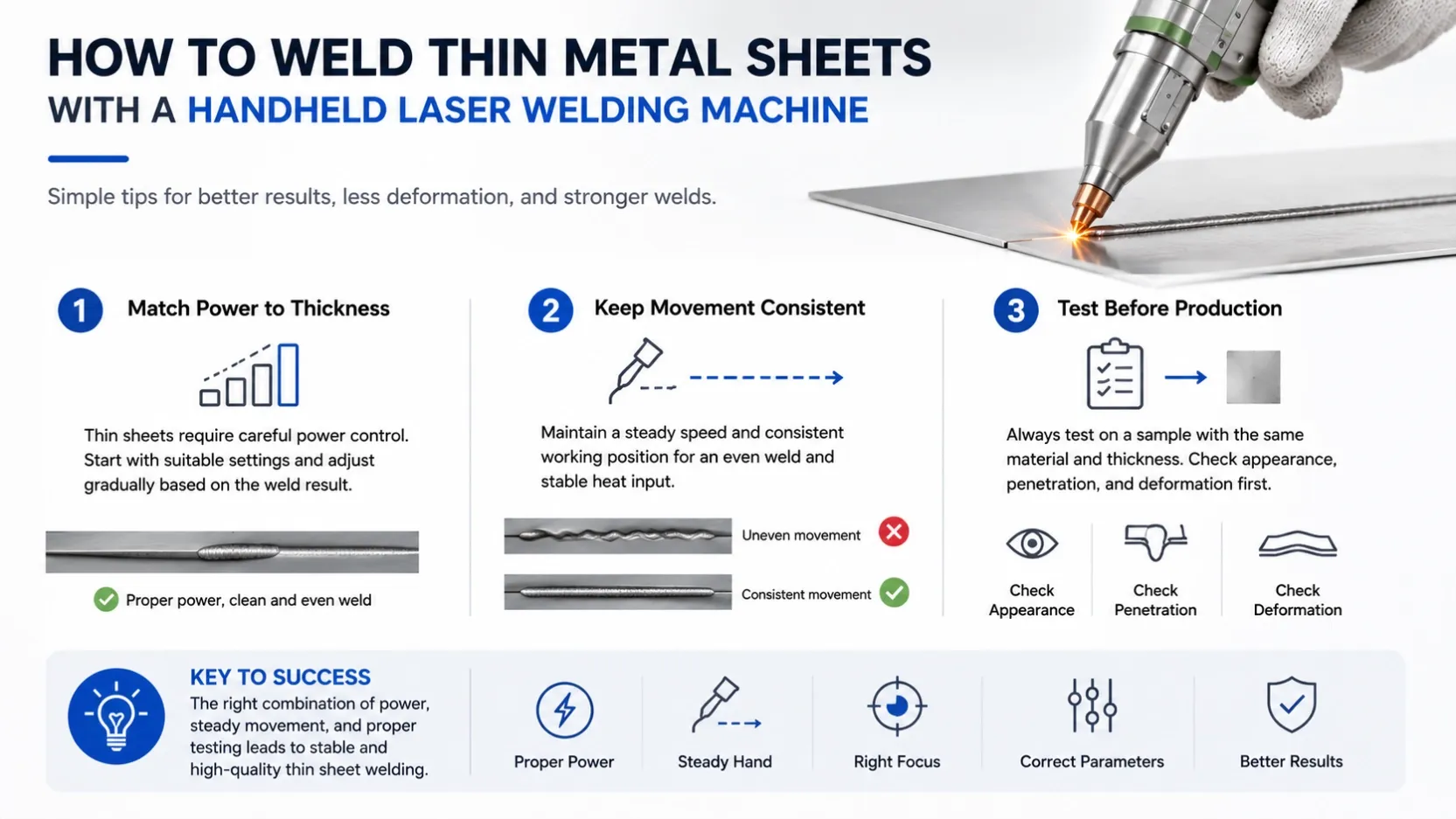
Welding thin metal sheets can be challenging. Too much heat may cause burn-through, warping, or an uneven weld, while insufficient heat can lead to poor fusion.
Here are three practical ways to improve thin-sheet laser welding.
1. Match Laser Power to Material Thickness
Thin sheets require careful power control. Start with suitable settings for the material and thickness, then make small adjustments based on the weld result.
2. Keep Your Welding Movement Consistent
Sudden changes in hand movement can create uneven weld widths and inconsistent heat input. Maintain a steady welding speed and a consistent working position.
3. Test Before Production
Before welding the final workpiece, test the settings on a sample made from the same material and thickness. Check weld appearance, penetration, and deformation before proceeding.
Choose the Right Setup
Stable thin-sheet welding depends on more than laser power. The laser source, Handheld Welding Head, focus position, and welding parameters must work together.
Need help selecting a suitable setup? Visit our website to explore our handheld laser welding machines, welding heads, and accessories for different production needs.