Aug 27, 2026
How to Set the Correct Focus Position for Handheld Laser Welding?
Learn how focus position affects handheld laser welding quality and how proper adjustment can improve penetration, weld appearance, and overall welding stability.
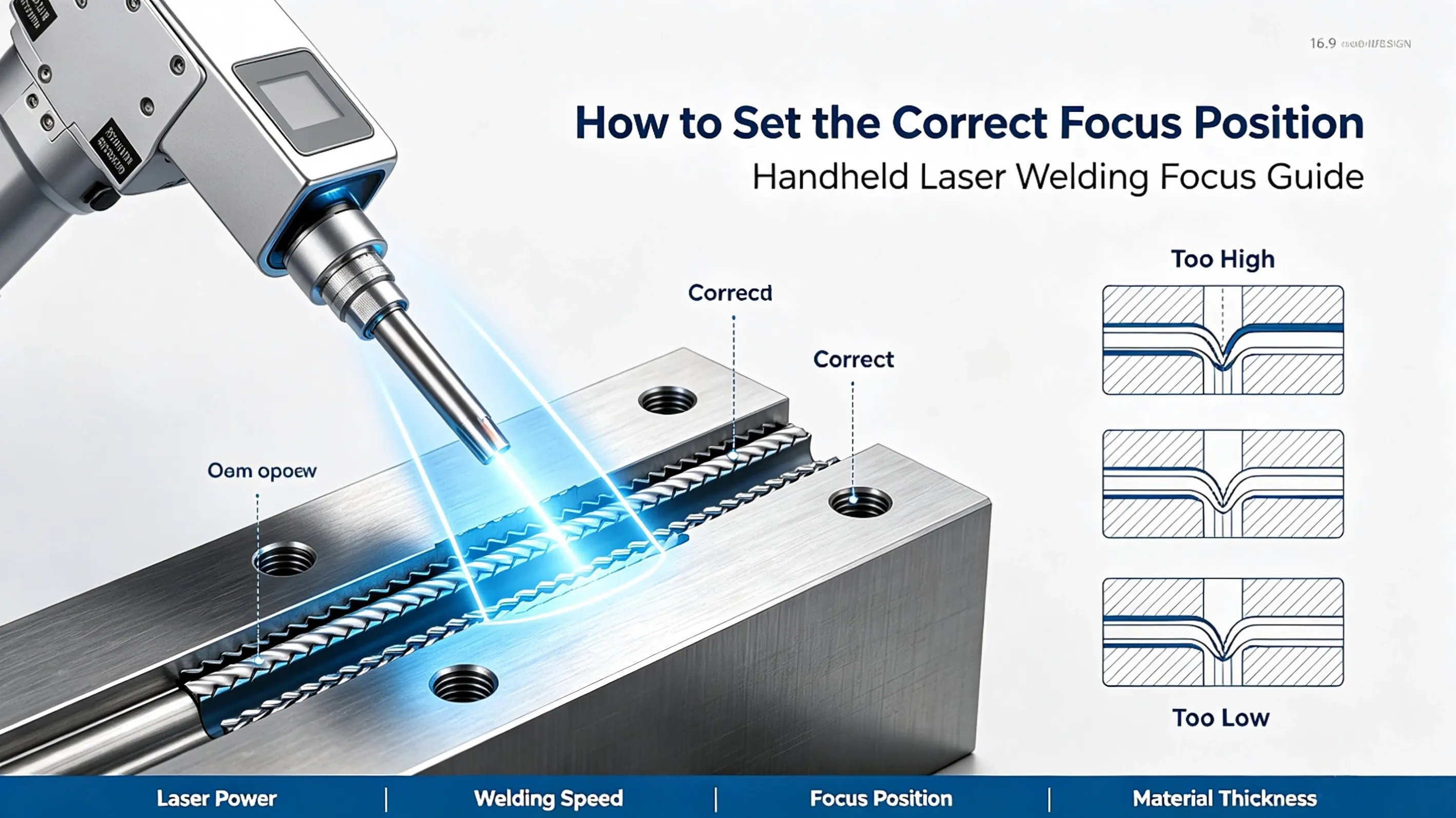
In Handheld Laser Welding, laser focus position has a direct impact on energy density, penetration, weld width, and overall weld quality.
Even when the laser power and welding speed are correctly set, an incorrect focus position can result in an unstable molten pool, insufficient penetration, excessive heat input, or an uneven weld seam.
Understanding how laser focus works can help operators achieve more consistent welding results.
1. What Is the Laser Focus Position?
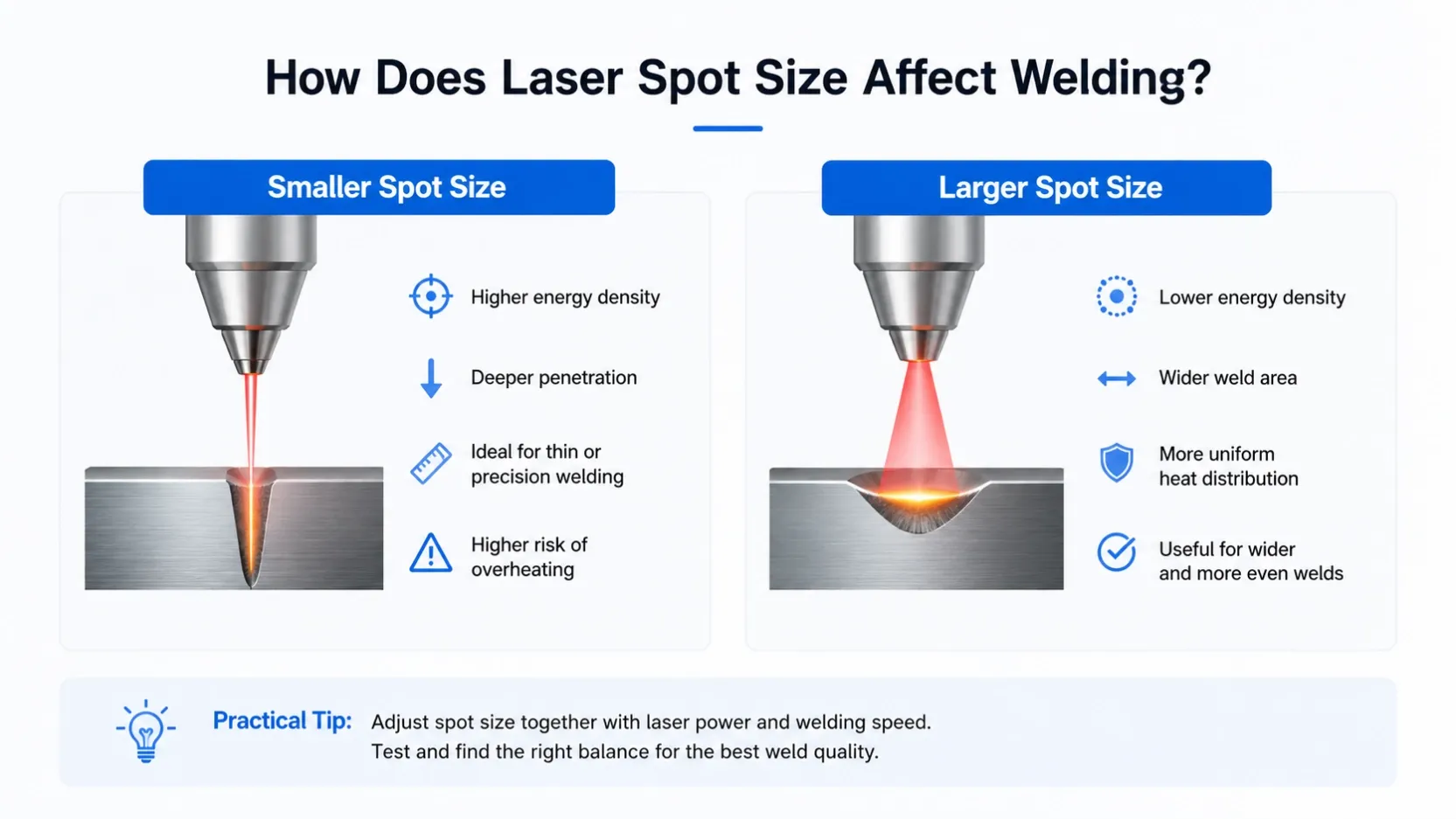
The focus position is the point where the laser beam reaches its smallest diameter and highest energy density.
During laser welding, the position of the focal point relative to the workpiece affects how laser energy is distributed.
The focus can generally be positioned:
- Above the workpiece surface
- At the workpiece surface
- Below the workpiece surface
The correct position depends on the material, thickness, laser power, joint design, and welding parameters.
2. Why Is Focus Position Important?
Laser welding relies on concentrated energy to create a stable molten pool.
When the focus position is appropriate, the laser energy can be effectively delivered to the welding area.
This can help achieve:
Stable penetration
The laser energy is concentrated where it is needed.
Better weld formation
A stable molten pool helps produce a more uniform weld seam.
Controlled heat input
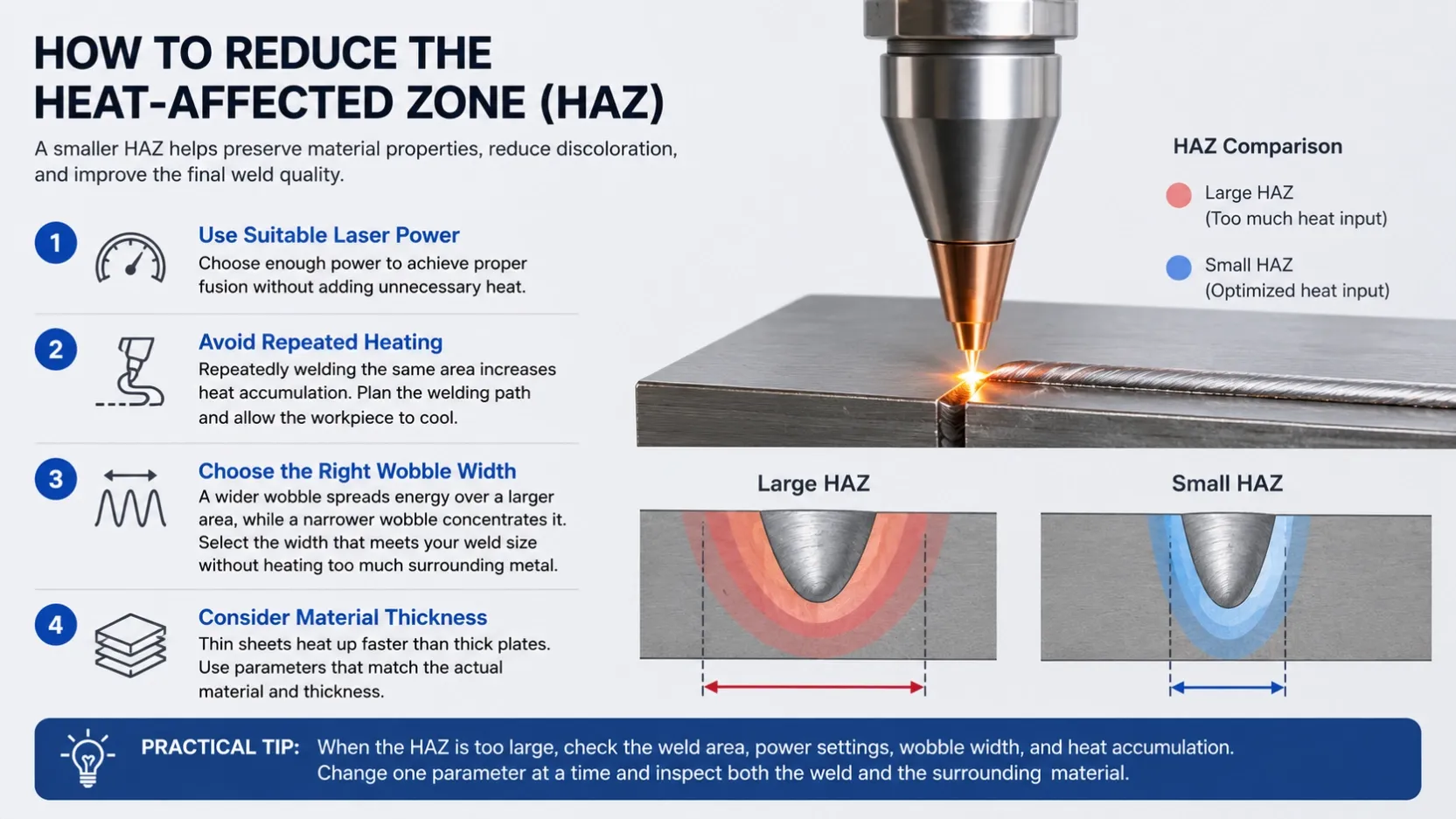
Proper focus can reduce unnecessary heating around the welding area.
More consistent results
A suitable focus position makes the welding process easier to control.
3. What Happens When the Focus Is Incorrect?
An incorrect focus position can affect the shape and stability of the weld.
Focus Too Far Above the Workpiece
The laser spot on the material becomes larger, reducing energy density.
This may result in:
- Insufficient penetration
- Wider and less concentrated heating
- Unstable welding
Focus Too Far Below the Workpiece
The energy distribution inside the material may no longer be suitable for the specific application.
This can affect:
- Penetration depth
- Weld width
- Molten pool stability
- Overall weld appearance
The exact effect depends on the material and welding setup, so focus position should be optimized together with other parameters.
4. How to Find the Correct Focus Position?
There is no single focus position that works for every welding application.
A practical approach is to start with the recommended focus position from the machine or welding head manufacturer and then perform test welds.
During testing, observe:
- Weld penetration
- Weld width
- Molten pool stability
- Surface appearance
- Heat-affected area
Make small adjustments rather than changing the focus position significantly at once.
This makes it easier to identify the optimal setting.
5. Focus Position and Material Thickness
Material thickness is another important consideration.
For thin materials, excessive energy concentration can increase the risk of overheating or burn-through.
For thicker materials, the focus position may need to be adjusted to achieve the required penetration.
However, focus position should not be considered separately.
It should be evaluated together with:
Laser Power + Welding Speed + Focus Position + Wobble Width + Material Thickness
Changing one parameter may require adjustment of the others.
6. Different Materials May Require Different Settings
Different metals absorb and conduct laser energy differently.
For example, stainless steel, carbon steel, aluminum, and copper can require different welding parameters.
Therefore, operators should not simply copy the focus position used for one material and apply it directly to another.
The best approach is to establish suitable parameters for each material and thickness through controlled testing.
7. Keep the Welding Distance Consistent
Focus position is also related to the distance between the welding head and the workpiece.
If the working distance changes continuously during welding, the actual position of the laser focus relative to the material can also change.
This can lead to variations in:
- Penetration
- Weld width
- Heat input
- Weld appearance
For more consistent results, maintain a stable working distance and welding angle whenever possible.
8. A Simple Focus Adjustment Method
When optimizing focus for a new application, operators can follow a simple process:
Step 1
Select the recommended starting parameters.
Step 2
Set the initial focus position according to the equipment manufacturer's guidelines.
Step 3
Perform a short test weld on the same material and thickness.
Step 4
Check penetration and weld appearance.
Step 5
Make small focus adjustments.
Step 6
Compare the results and select the most stable setting.
This method is more reliable than changing multiple parameters at the same time.
Tips for Better Focus Control
- Keep the welding head at a consistent distance
- Use the recommended focus setting as a starting point
- Test parameters on the actual material
- Adjust focus in small steps
- Consider material thickness
- Match focus with laser power and welding speed
- Keep the protective lens clean
- Record successful parameters for future production
Focus position is an important parameter in Handheld Laser Welding.
The correct focus can help control energy density, penetration, weld width, and molten pool stability.
However, there is no universal focus setting for every application. The optimal position depends on the material, thickness, laser power, welding speed, joint design, and welding head.
By starting with recommended parameters and making controlled adjustments through test welding, operators can achieve more stable and consistent welding results.