Jul 28, 2026
How to Choose the Right Power for Handheld Laser Welding Machine?
Proper laser power optimizes handheld welding performance, as higher wattage is not always better.1000W–3000W welders fit tasks from thin sheets to heavy structural welding.
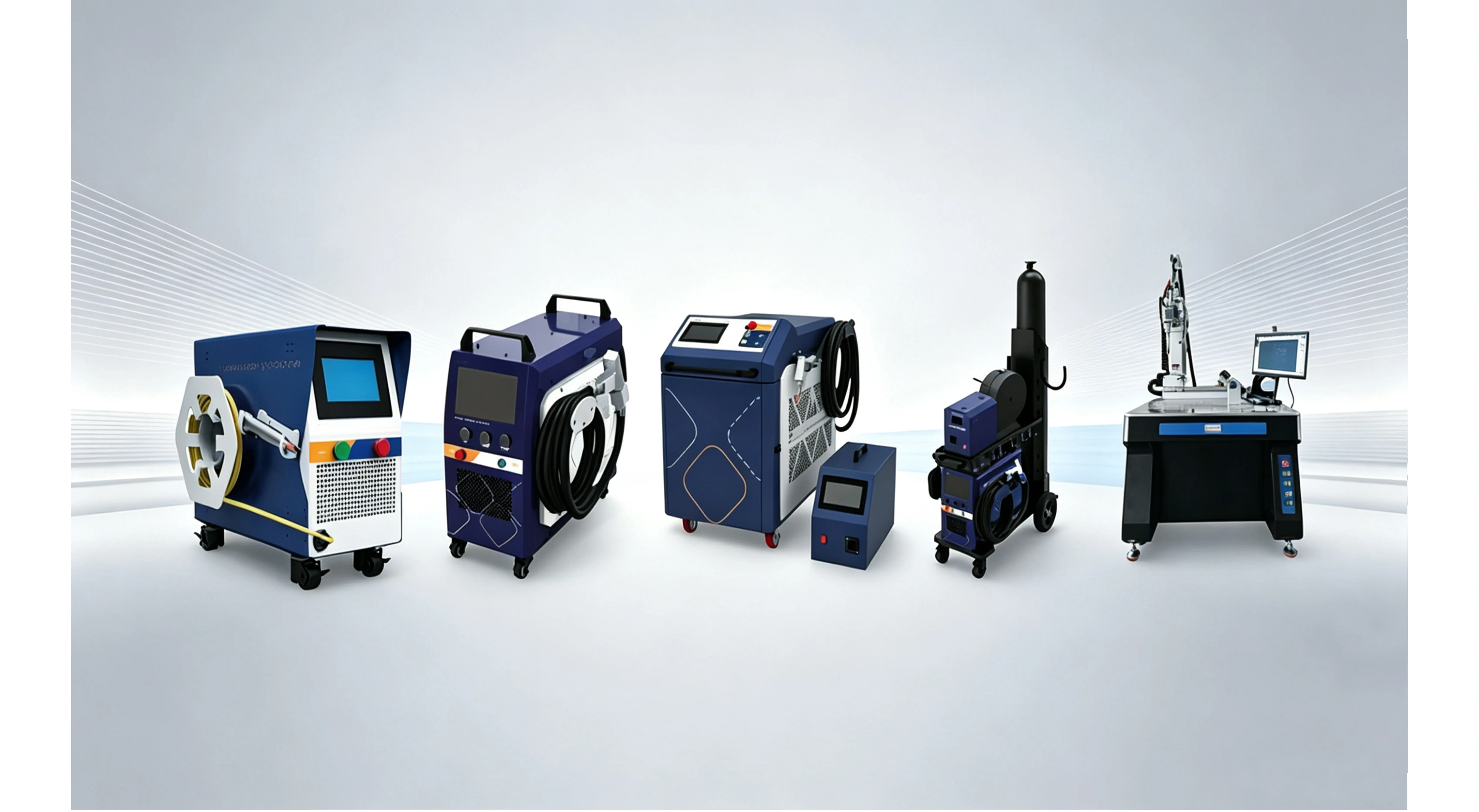
Choosing the right power is one of the most important decisions when investing in a Handheld Laser Welding Machine. Whether you're welding stainless steel, carbon steel, aluminum, or galvanized steel, selecting the appropriate laser power directly affects weld quality, productivity, operating costs, and application range.
Many buyers assume that a higher-power Handheld Welding Machine always delivers better performance. In reality, the ideal power depends on several factors, including material type, material thickness, welding speed, production volume, and budget.
This guide explains the differences between 1000W, 1500W, 2000W, and 3000W Handheld Laser Welding Machines, helping you choose the best solution for your business.
Why Is Laser Power Important?
Laser power determines how much energy is delivered to the workpiece during welding. Selecting the right power helps produce strong, clean welds with minimal heat distortion while improving production efficiency.
The right laser power offers several advantages:
- Better weld penetration
- Faster welding speed
- Improved weld quality
- Lower heat distortion
- Higher production efficiency
However, choosing a machine with more power than your application requires may increase equipment costs and energy consumption without providing additional benefits.
The best choice is the one that matches your actual production needs.
1000W Handheld Laser Welding Machine
A 1000W Handheld Laser Welding Machine is ideal for light-duty fabrication and thin sheet metal applications.
Recommended Materials
- Stainless Steel
- Carbon Steel
- Mild Steel
Recommended Thickness
Approximately 0.5–3 mm
Typical Applications
- Sheet metal fabrication
- Stainless steel products
- Metal furniture
- Repair and maintenance
Advantages
- Lower investment cost
- Easy to operate
- Energy efficient
- Ideal for small workshops
1500W Handheld Laser Welding Machine
The 1500W Handheld Laser Welding Machine is one of the most popular models because it offers an excellent balance between performance and cost.
Recommended Materials
- Stainless Steel
- Carbon Steel
- Galvanized Steel
- Aluminum (with optimized parameters)
Recommended Thickness
Approximately 1–4 mm
Typical Applications
- Metal fabrication
- Kitchen equipment
- Doors and windows
- Hardware manufacturing
Advantages
- Faster welding than 1000W
- Better penetration
- Suitable for most fabrication work
- Excellent cost-performance ratio
2000W Handheld Laser Welding Machine
A 2000W Handheld Laser Welding Machine is designed for manufacturers who require higher productivity and deeper weld penetration.
Recommended Materials
- Stainless Steel
- Carbon Steel
- Galvanized Steel
- Aluminum
Recommended Thickness
Approximately 2–6 mm
Typical Applications
- Industrial manufacturing
- Machinery production
- Structural fabrication
- Medium and heavy-duty welding
Advantages
- Higher welding speed
- Greater penetration depth
- Improved production efficiency
- Suitable for continuous operation
3000W Handheld Laser Welding Machine
A 3000W Handheld Laser Welding Machine is designed for demanding industrial applications requiring maximum welding performance.
Recommended Materials
- Stainless Steel
- Carbon Steel
- Thick aluminum components
- Heavy metal structures
Recommended Thickness
Approximately 4–8 mm or more, depending on the material type and welding process.
Typical Applications
- Heavy equipment manufacturing
- Steel structures
- Shipbuilding components
- Large industrial fabrication
- High-volume production
Advantages
- Maximum penetration capability
- Faster welding of thick materials
- Higher productivity
- Excellent performance in demanding environments
Handheld Laser Welding Machine Power Comparison
Laser Power | Recommended Thickness* | Typical Applications |
|---|---|---|
1000W | 0.5–3 mm | Thin sheet metal, repair work |
1500W | 1–4 mm | General fabrication, hardware manufacturing |
2000W | 2–6 mm | Industrial manufacturing, machinery |
3000W | 4–8 mm+ | Heavy-duty fabrication, large structures |
Note: Actual welding thickness depends on the material type, joint design, welding speed, filler wire, and welding parameters.
Other Factors to Consider
Choosing the right Handheld Welding Machine is not only about power. The following factors should also be considered.
Material Type
Different metals absorb laser energy differently.
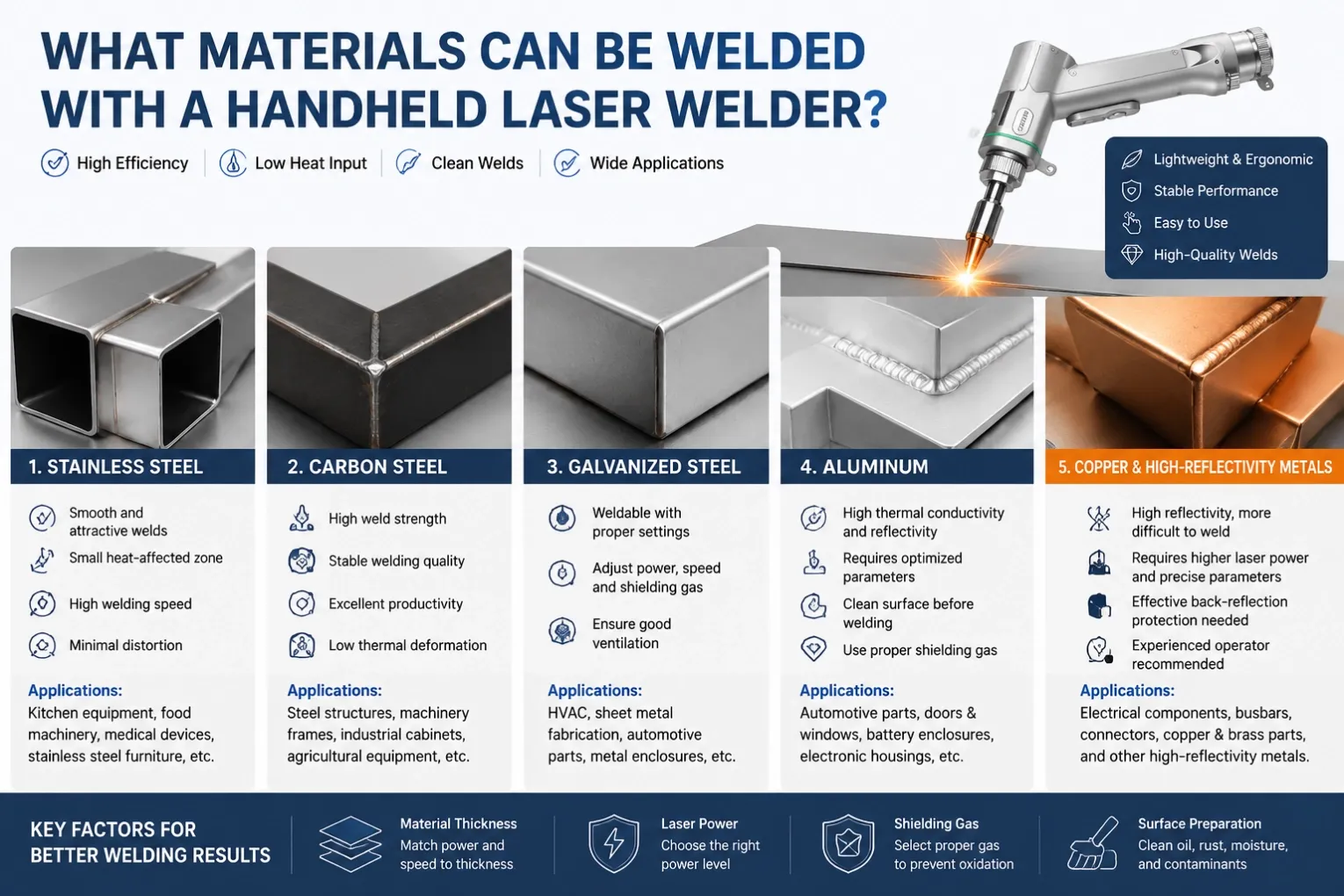
- Stainless steel offers excellent weldability.
- Carbon steel provides stable welding performance.
- Aluminum requires optimized parameters because of its high thermal conductivity.
- Copper and brass are highly reflective materials and generally require higher laser power and an effective back-reflection protection system.
Production Requirements
For repair work or small-batch production, a 1000W or 1500W Handheld Laser Welding Machine is usually sufficient.
For continuous industrial manufacturing, 2000W and 3000W models provide higher productivity and faster welding speeds.
Welding Speed
Higher laser power generally supports faster travel speeds while maintaining good weld penetration, helping manufacturers improve production efficiency.
Future Business Growth
If your production capacity is expected to increase in the future, choosing a slightly higher-power Handheld Laser Welding Machine can provide greater flexibility for new applications.
Common Mistakes When Choosing Laser Power
Choosing the Highest Power Without Considering Your Needs
More power does not always mean better welding results. The best machine is the one that matches your materials and applications.
Ignoring Material Thickness
A machine designed for thin sheet metal may not provide sufficient penetration for thicker materials.
Focusing Only on Purchase Price
Selecting equipment based only on initial cost may reduce long-term productivity and increase operating expenses.
Choosing the right Handheld Laser Welding Machine depends on your materials, thickness, production requirements, and budget.
- 1000W is ideal for thin sheet metal and repair work.
- 1500W is the best choice for most fabrication applications.
- 2000W offers higher efficiency for industrial production.
- 3000W is recommended for heavy-duty welding and large-scale manufacturing.
By understanding your welding requirements and selecting the appropriate laser power, you can improve weld quality, increase production efficiency, and maximize the return on your investment.