Sep 21, 2026
How to Choose the Right Laser Source for a Handheld Laser Welding Machine?
Choosing a laser source is not just about power. Learn how brand, workload, compatibility, and service support affect the performance of a handheld laser welding machine.
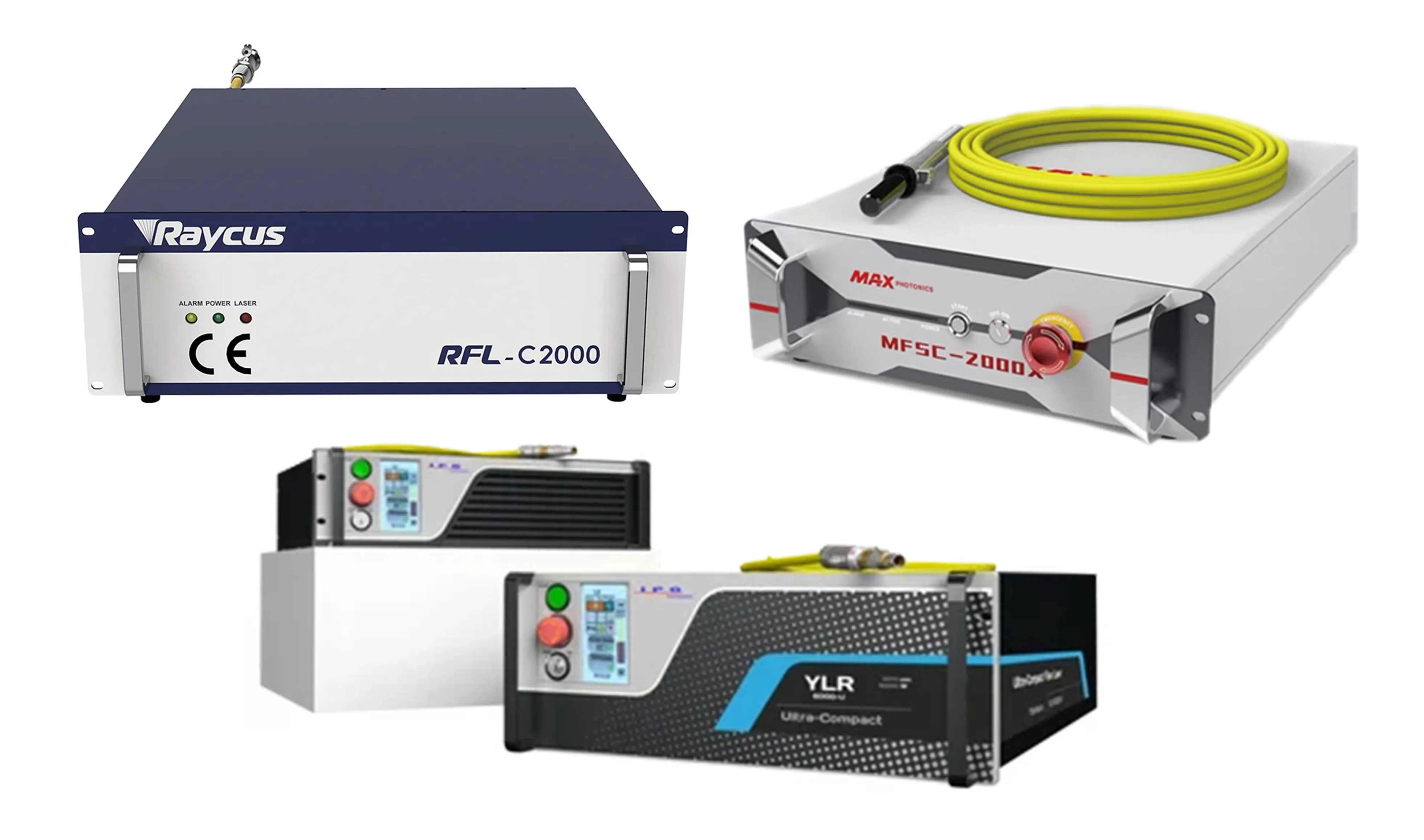
The laser source is one of the key components of a handheld laser welding machine. It directly affects welding stability, penetration, efficiency, and long-term operation. However, choosing a laser source should not be based on power alone.
1. Choose the Right Laser Power
Common handheld laser welding machines use 1000W, 1500W, 2000W, and higher-power laser sources.
As a general reference:
Laser Power | Typical Use |
|---|---|
1000W | Thin sheet metal and lighter welding work |
1500W | General fabrication and a wider range of materials |
2000W | Thicker materials and higher production requirements |
The actual result also depends on material, thickness, joint condition, welding speed, and process parameters.
2. Consider the Laser Source Brand
Several laser source brands are commonly used in handheld welding machines, including Raycus, MAX, and IPG.
The choice can depend on your target market, budget, required operating hours, service requirements, and replacement availability.
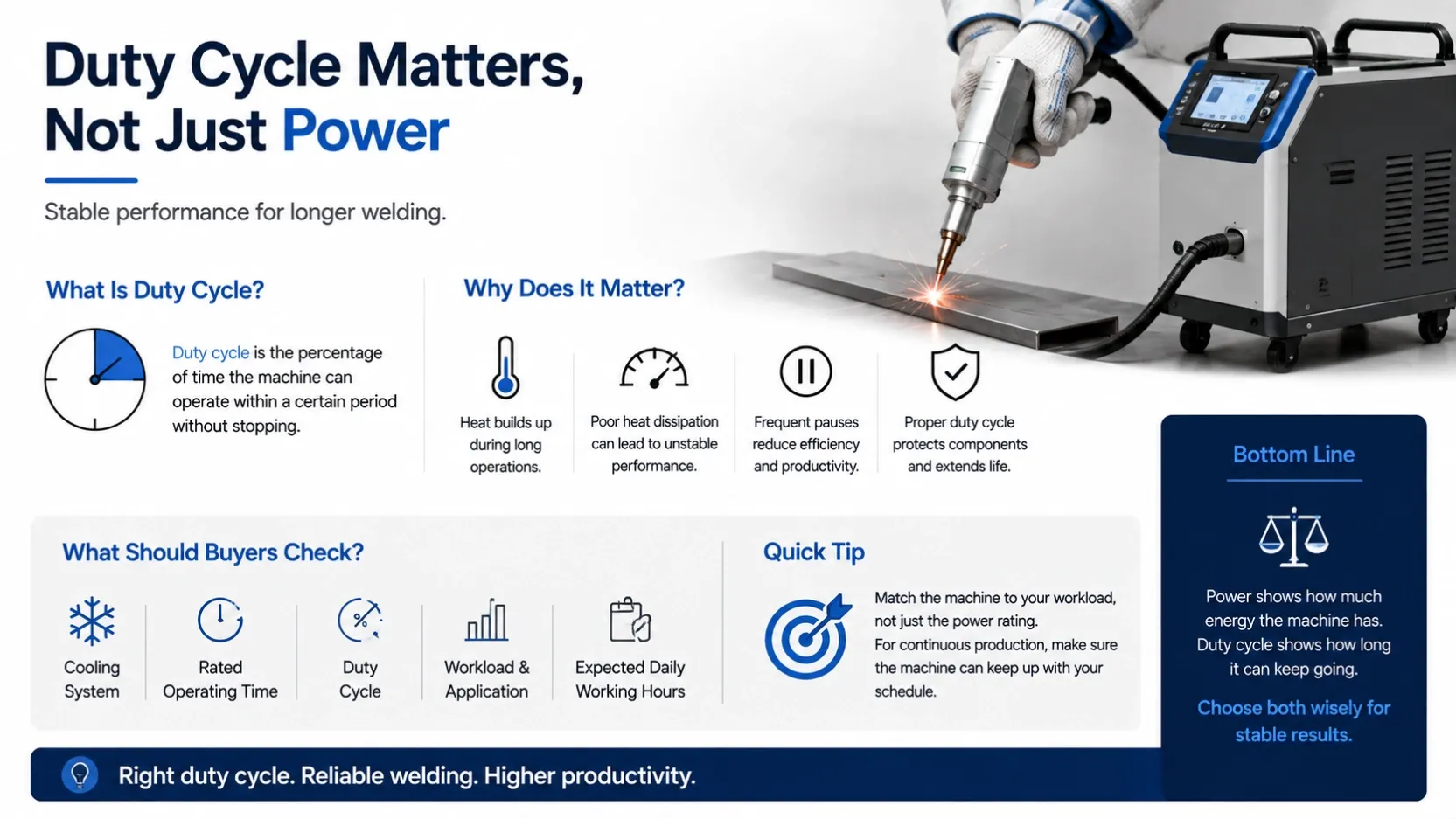
For customers running machines for long production hours, it is especially important to consider the source's stability, cooling requirements, service support, and expected operating conditions.
3. Don't Choose the Laser Source Separately
The laser source needs to work properly with the rest of the system.
Before purchasing, check the compatibility between:
- Laser Source
- Handheld Welding Head
- Cooling system
- Control system
- Fiber cable
- Wire feeder, if required
For example, increasing laser power without checking the cooling capacity or other components can create unnecessary operating problems.
4. Match the Laser Source to Your Workload
A small workshop with occasional welding jobs may have different requirements from a factory running several hours every day.
Before choosing a laser source, consider:
Material → Thickness → Daily working hours → Required welding speed → Production volume
This gives you a better basis for choosing the right power and configuration instead of simply buying the highest-power option.
5. What Should You Ask Your Supplier?
Before placing an order, confirm:
- Laser source brand and model
- Rated laser power
- Cooling requirements
- Fiber length and specifications
- Warranty and service support
- Replacement parts availability
- Compatibility with the Handheld Welding Head
A good laser source should match your welding application, production workload, and complete machine configuration. Raycus, MAX, and IPG can all be considered depending on the customer's requirements and budget.
At Lino, we provide handheld laser welding machines, laser sources, Handheld Welding Heads, and related accessories, helping customers build a suitable welding solution from one source.