Aug 31, 2026
How Does Wobble Width Affect Handheld Laser Welding?
Learn how wobble width affects weld seam width, penetration, and overall quality in handheld laser welding, with practical tips for better parameter control.
In Handheld Laser Welding, the laser beam can be moved in different patterns to control the shape and size of the weld.
One important parameter is wobble width.
By changing the wobble width, operators can adjust the effective welding area and weld seam appearance. However, an unsuitable setting may reduce penetration or create excessive heat input.
Understanding how wobble width works can help operators achieve more consistent welding results.
1. What Is Wobble Width?
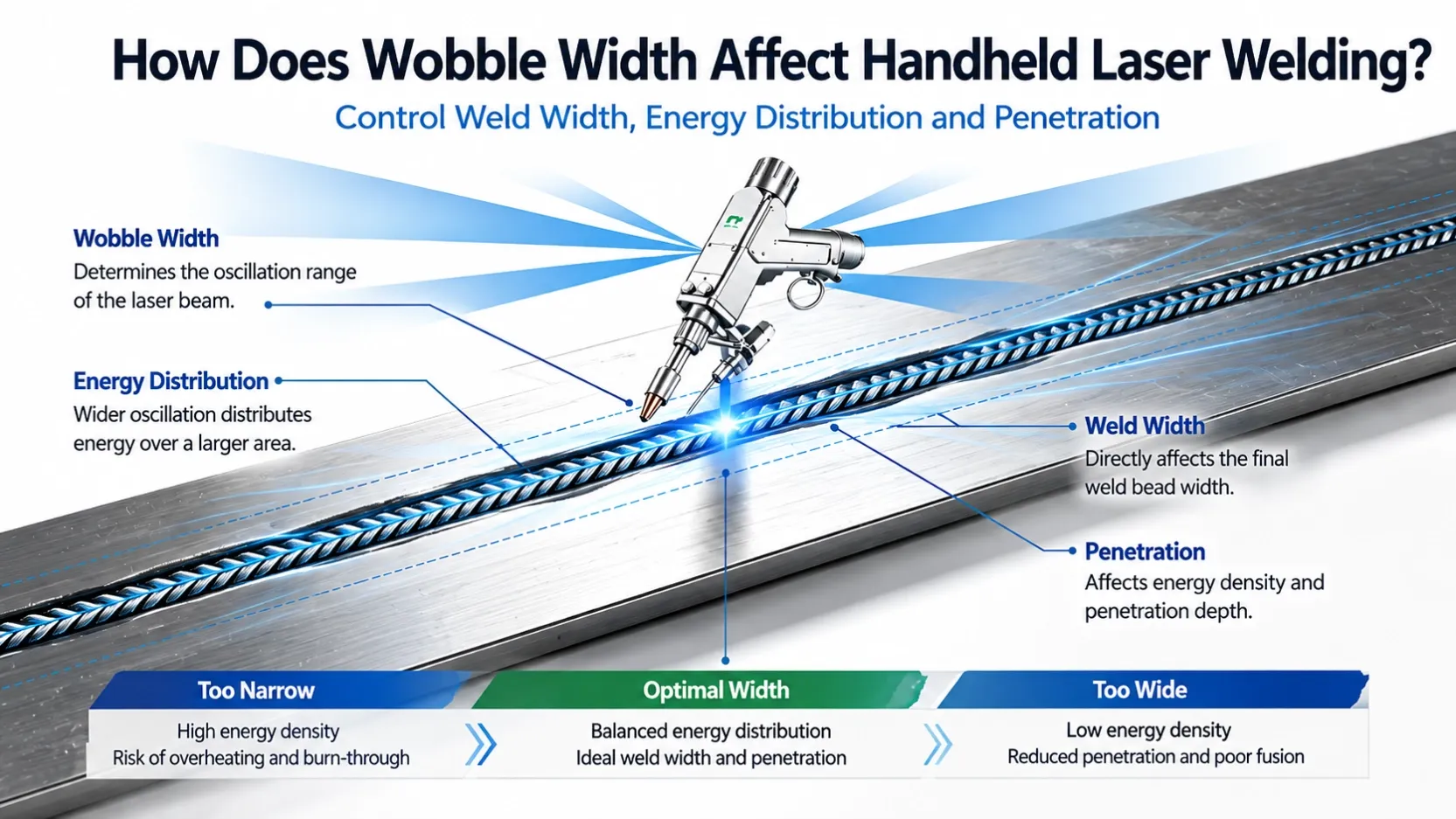
Wobble width refers to the range over which the laser beam moves from side to side during welding.
Compared with straight-line welding, wobble welding spreads the laser energy across a wider area.
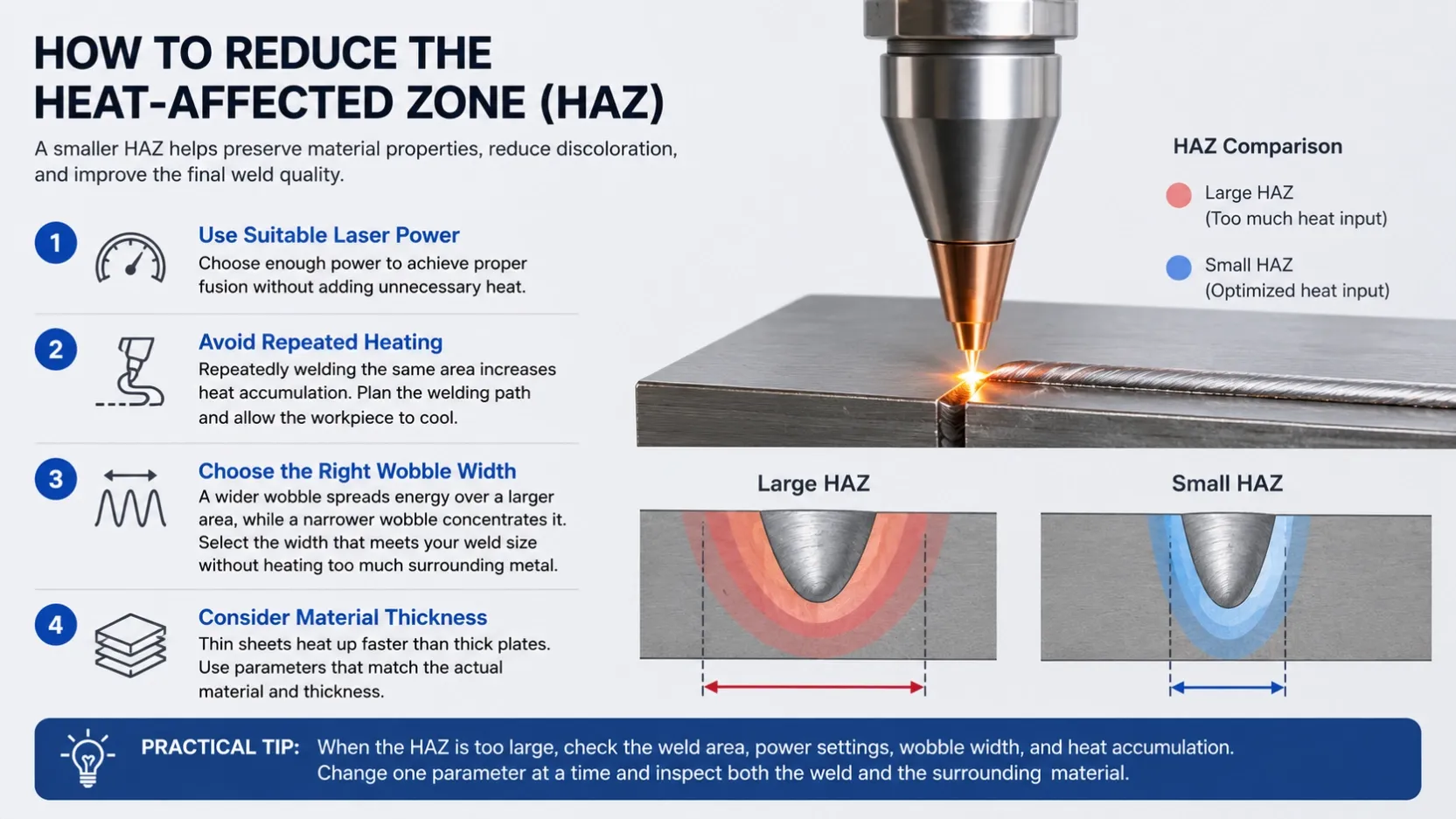
A larger wobble width generally produces a wider weld seam, while a smaller width concentrates the energy into a narrower area.
The suitable setting depends on the material, thickness, laser power, joint type, and required weld width.
2. What Happens When Wobble Width Is Too Small?
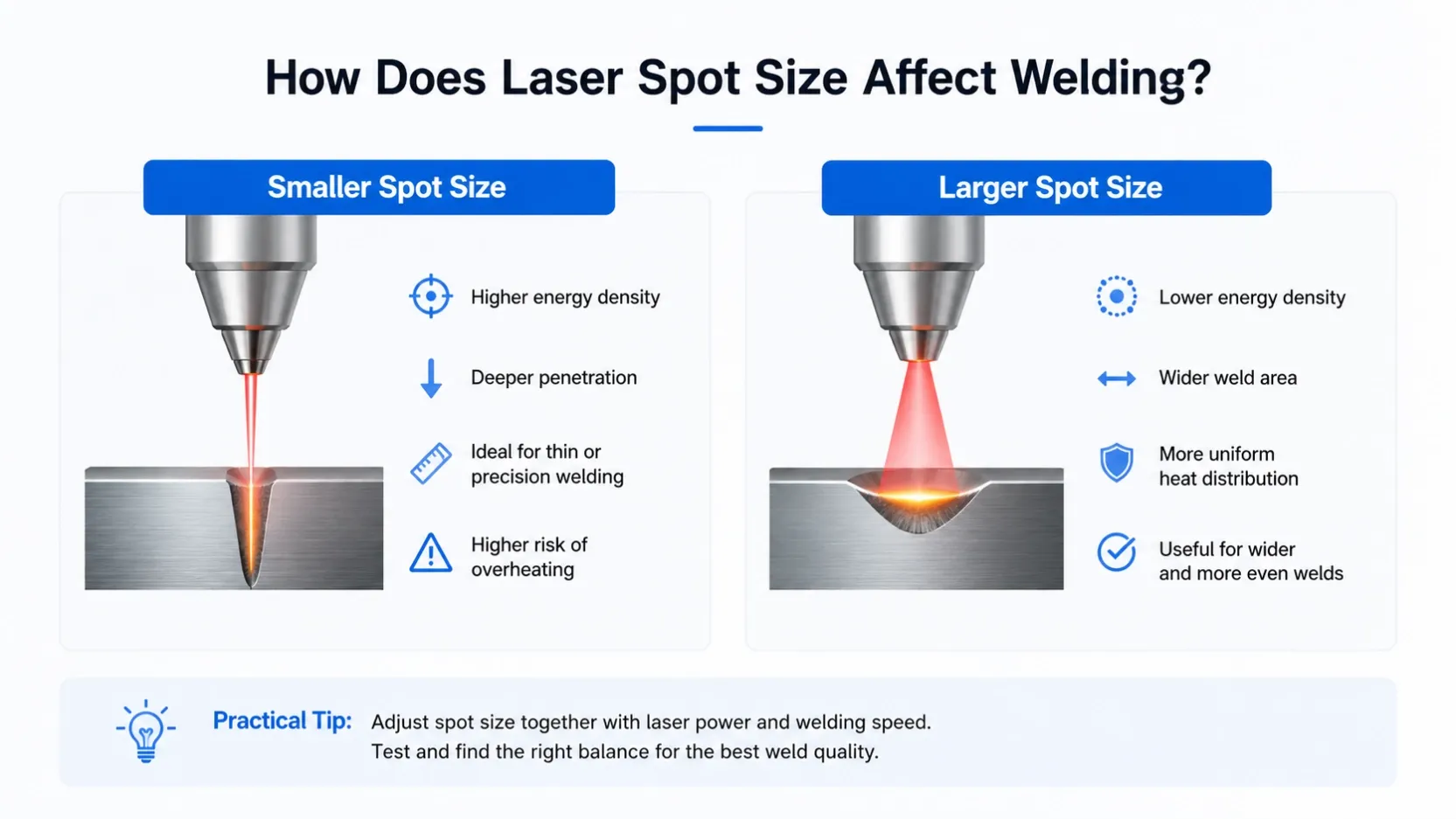
When the wobble width is too small, the laser energy is concentrated in a relatively narrow area.
This can provide higher local energy density and may help with penetration.
However, if the setting is not suitable, it can also result in:
- A narrow weld seam
- Excessive local heat
- Uneven weld formation
- Increased risk of overheating on thin materials
Therefore, a smaller wobble width is not always better.
3. What Happens When Wobble Width Is Too Large?
Increasing the wobble width spreads the laser energy over a larger area.
This can help create a wider and more visually uniform weld seam.
However, if the wobble width is excessive, the energy density at the center of the welding area may become too low.
Possible results include:
- Reduced penetration
- Poor fusion
- Wider but weaker weld formation
- Unstable molten pool
For this reason, wobble width should be adjusted according to the actual welding application.
4. Wobble Width and Weld Seam Width
One of the main reasons manufacturers use wobble welding is to control weld seam width.
A suitable wobble width can help achieve a weld seam that matches the joint design and required appearance.
For example:
Small wobble width → Narrower, more concentrated weld
Larger wobble width → Wider, more distributed weld
However, weld width is not determined by wobble width alone.
Laser power, welding speed, material thickness, and wobble frequency can also affect the final weld shape.
5. How Does Wobble Width Affect Penetration?
Wobble width changes how laser energy is distributed across the workpiece.
When the width increases, the same laser energy is distributed over a larger area. This can reduce the effective energy density and may decrease penetration.
When the width is reduced, energy becomes more concentrated.
Therefore, if penetration becomes insufficient after increasing the wobble width, operators should review the complete parameter combination instead of simply increasing the laser power.
6. Different Materials Need Different Settings
Different metals respond differently to laser energy.
Stainless steel, carbon steel, aluminum, and copper have different thermal and optical properties.
As a result, the same wobble width may produce different results on different materials.
Operators should consider:
- Material type
- Material thickness
- Joint configuration
- Laser power
- Welding speed
- Wobble width
- Wobble frequency
Testing on the actual material is the most reliable way to establish suitable parameters.
7. How to Find the Right Wobble Width?
There is no universal wobble width for every application.
A practical method is to start with the recommended parameter from the equipment manufacturer and then make small adjustments.
Step 1
Select the appropriate laser power.
Step 2
Set the welding speed according to the material.
Step 3
Choose an initial wobble width.
Step 4
Perform a test weld.
Step 5
Check weld width, penetration, and surface appearance.
Step 6
Adjust the wobble width gradually.
This allows operators to find a suitable balance between weld appearance and welding performance.
8. Wobble Width Should Not Be Adjusted Alone
A common mistake is changing wobble width without considering other welding parameters.
In practice, these parameters work together:
Laser Power + Welding Speed + Wobble Width + Wobble Frequency + Material Thickness
For example, increasing wobble width may require adjustments to laser power or welding speed to maintain suitable energy input.
A good welding parameter is therefore not a single number, but a matched combination of settings.
Practical Tips
- Start with the manufacturer's recommended parameters
- Use smaller adjustments when changing wobble width
- Consider material thickness
- Match wobble width with laser power
- Check penetration after changing the width
- Maintain a stable welding movement
- Test on the actual material before mass production
- Record successful parameters for future use
Wobble width is an important parameter in Handheld Laser Welding.
It affects how laser energy is distributed and can influence weld seam width, penetration, heat input, and weld appearance.
A smaller wobble width concentrates energy into a narrower area, while a larger width distributes energy across a wider area.
The best setting depends on the material, thickness, laser power, welding speed, joint design, and wobble frequency.
By testing and optimizing these parameters together, manufacturers can achieve more stable and consistent handheld laser welding results.