Aug 28, 2026
How Does Welding Speed Affect Handheld Laser Welding Quality?
Learn how welding speed affects handheld laser welding quality and how to balance speed, laser power, and heat input for consistent welds.
Welding speed is one of the key parameters that affects weld quality.
Even with the correct laser power and suitable material preparation, an inappropriate welding speed can lead to poor penetration, excessive heat input, uneven weld formation, or an unstable molten pool.
Understanding the relationship between welding speed and laser power can help operators achieve more consistent results.
1. What Happens When Welding Speed Is Too Fast?
When the welding head moves too quickly, the laser has less time to deliver energy to each area of the workpiece.
This may cause:
- Insufficient penetration
- Narrow or discontinuous welds
- Poor fusion
- Unstable weld formation
If the weld looks too shallow or the two materials are not properly fused, welding speed may be one of the parameters that needs to be checked.
2. What Happens When Welding Speed Is Too Slow?
A slower welding speed means more laser energy is delivered to the same area.
While this can increase penetration in some situations, excessive heat input can also create problems.
Possible results include:
- Excessive heat input
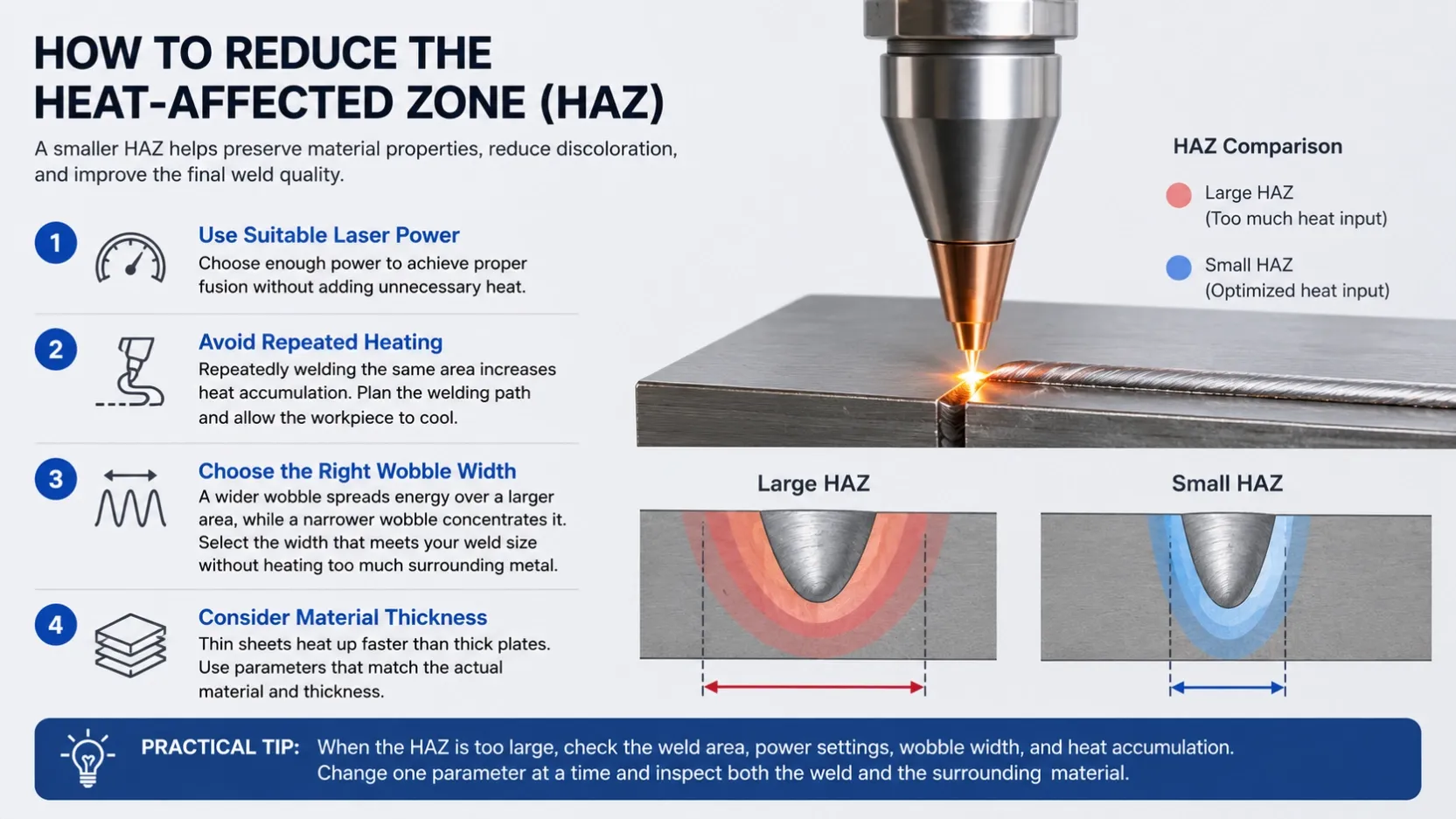
- Wider heat-affected area
- Material deformation
- Burn-through on thin materials
- Uneven weld appearance
Therefore, slower does not always mean better welding.
The goal is to find a suitable balance between energy input and travel speed.
3. Welding Speed and Laser Power Work Together
Welding speed should not be adjusted independently from laser power.
For example, if the laser power remains unchanged:
Higher welding speed → Lower energy input per unit length
Lower welding speed → Higher energy input per unit length
Therefore, when changing welding speed, operators may also need to adjust laser power and other welding parameters.
This relationship is especially important when switching between different material thicknesses.
4. How Does Welding Speed Affect Weld Appearance?
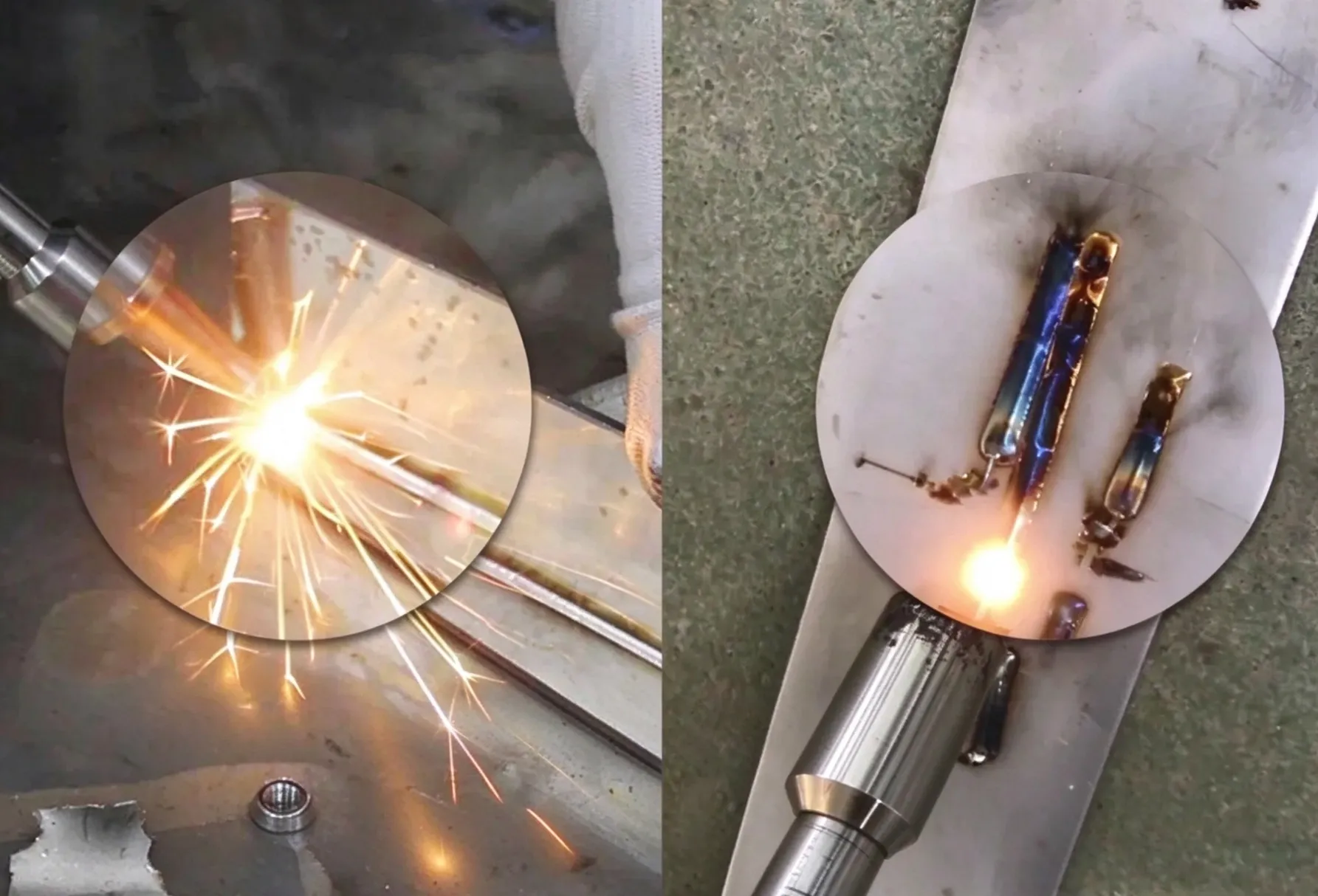
Welding speed can significantly influence the appearance of the weld seam.
An appropriate speed can help produce:
- Uniform weld width
- Stable molten pool
- Consistent weld formation
- Controlled heat input
If the speed is too high or too low, the weld may become irregular.
However, weld appearance should not be judged by speed alone. Laser power, wobble width, material thickness, joint design, and shielding gas can also affect the final result.
5. Thin Materials Need More Careful Speed Control
Thin metal sheets are particularly sensitive to heat input.
If the welding speed is too slow, excessive heat can accumulate and potentially cause deformation or burn-through.
For thin materials, operators should pay attention to the relationship between:
Laser Power + Welding Speed + Wobble Width + Material Thickness
Small parameter changes can sometimes produce noticeable differences in the weld.
6. Different Materials Require Different Welding Speeds
There is no universal welding speed for all metals.
Stainless steel, carbon steel, aluminum, and copper have different thermal and optical properties.
The appropriate speed depends on factors such as:
- Material type
- Material thickness
- Laser power
- Joint configuration
- Welding head
- Shielding gas
- Required weld appearance
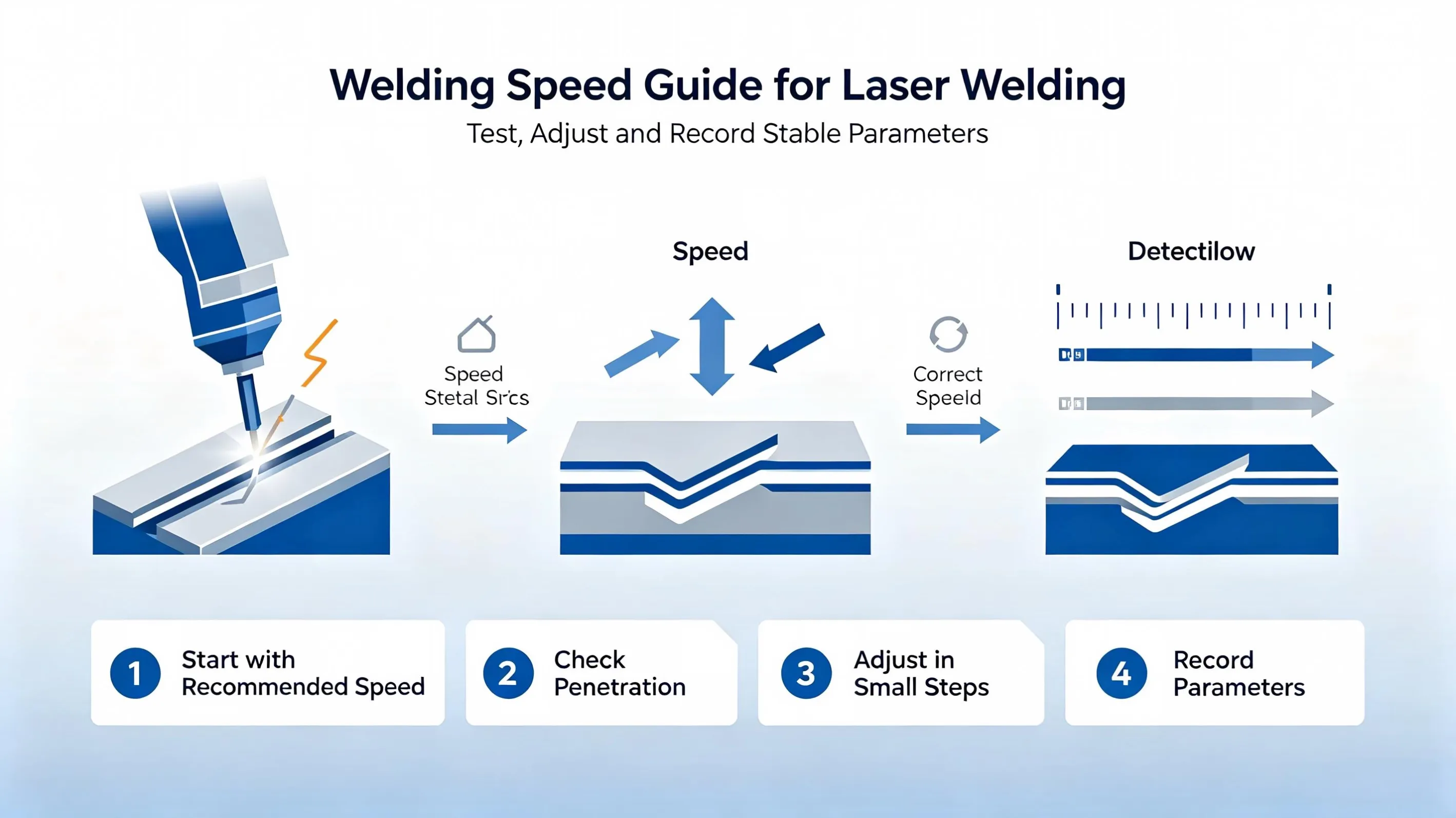
For this reason, operators should use recommended parameters as a starting point and then perform test welding on the actual material.
7. How to Find the Right Welding Speed?
A simple test method can help determine a suitable welding speed.
Step 1
Select the correct laser power for the material and thickness.
Step 2
Start with the manufacturer's recommended welding speed.
Step 3
Perform a short test weld.
Step 4
Check penetration, weld width, and surface appearance.
Step 5
Increase or decrease the speed gradually.
Step 6
Record the best-performing parameter combination.
Avoid changing several parameters at the same time. Adjusting one parameter at a time makes it easier to understand its effect.
8. Don't Focus Only on Maximum Speed
High welding speed can improve productivity, but maximum speed should not be the only target.
If increasing speed causes poor penetration or unstable weld formation, the actual production efficiency may decrease because of:
- Rework
- Additional grinding
- Welding defects
- Material waste
- Quality inspection issues
A stable welding speed with consistent quality is often more valuable than simply pursuing the highest possible speed.
Practical Tips
- Start with recommended parameters
- Match welding speed with laser power
- Consider material thickness
- Keep the welding movement stable
- Maintain a consistent working distance
- Test parameters before mass production
- Record successful settings for repeated jobs
Welding speed is a critical parameter in Handheld Laser Welding.
A speed that is too fast may reduce penetration and fusion, while a speed that is too slow can increase heat input and the risk of deformation or burn-through.
The best welding speed depends on the material, thickness, laser power, joint design, and other welding parameters.
Instead of simply choosing the fastest setting, manufacturers should find a balance between welding quality, stability, and production efficiency.
This approach can help achieve more consistent welds and more reliable production results.