Sep 14, 2026
How Does Welding Direction Affect Handheld Laser Welding?
A simple change in welding direction can affect heat flow and weld quality. Learn how to test different directions for more consistent results.
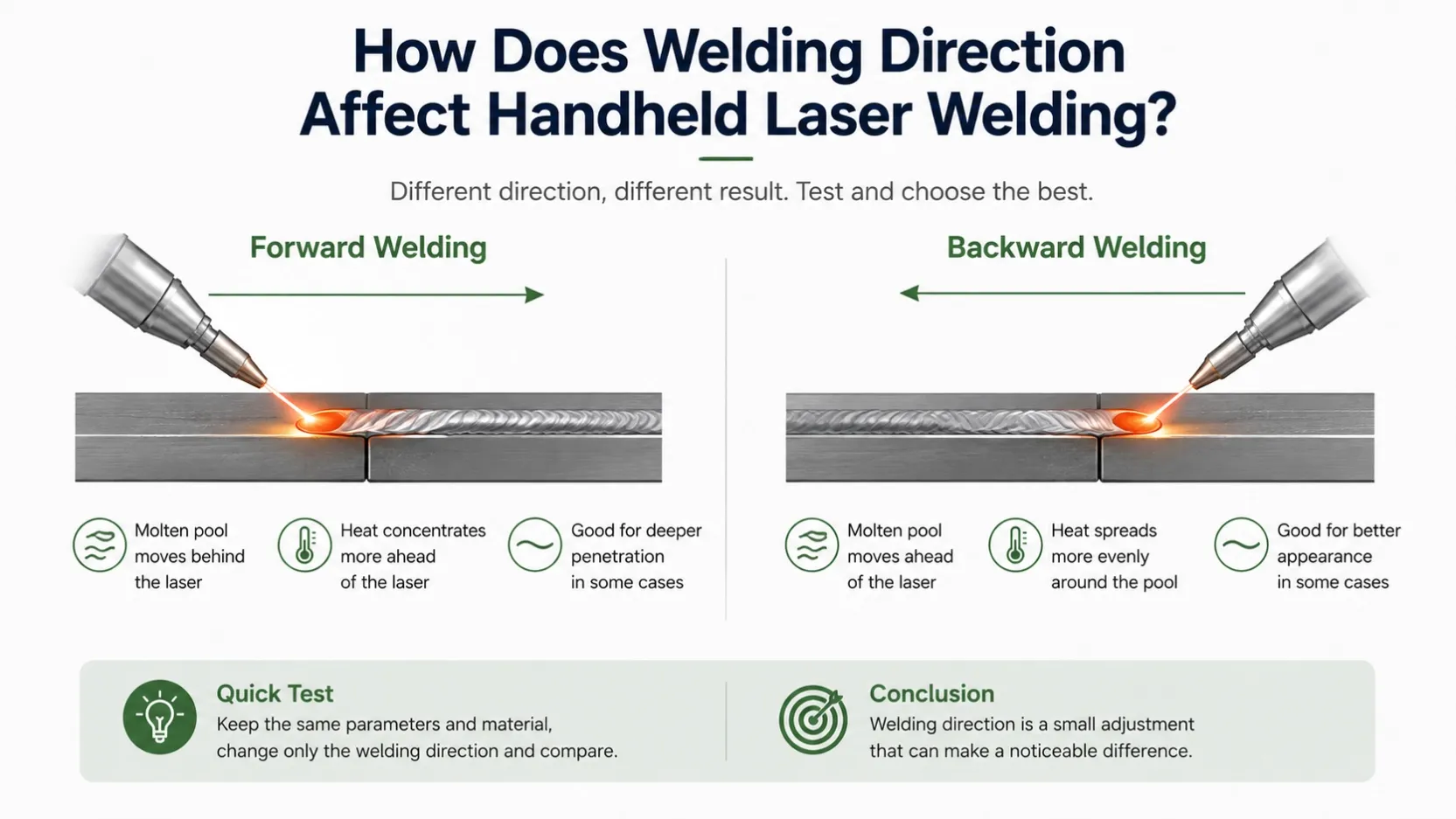
Welding direction can affect the heat distribution and the appearance of the weld. For some joints, simply changing the travel direction can make the welding process more stable.
1. Forward vs. Backward Movement
The direction of the Handheld Welding Head changes how the laser interacts with the molten pool.
When welding in different directions, the heat distribution around the joint can change, which may affect the weld shape and penetration.
2. Watch the Molten Pool
Instead of focusing only on welding speed, watch how the molten pool moves behind the laser spot.
A stable molten pool should move smoothly along the joint without excessive buildup or sudden spreading.
If the pool becomes difficult to control after changing direction, compare the weld with the original direction before changing other parameters.
3. Direction Matters More on Complex Joints
For corner, lap, and T-joints, the welding direction can affect how easily the molten material flows and how evenly both sides of the joint are heated.
A direction that works well for a flat butt joint may not give the same result on a corner or lap joint.
Quick Test
When a weld looks unstable:
Keep the same material and parameters → change only the welding direction → make a short test weld → compare the bead.
This simple test can help determine whether welding direction is affecting the result.
Welding direction is a small adjustment that can make a noticeable difference.
Before changing several parameters, test the welding direction and observe how the molten pool and weld bead respond.